
Zenless Zone Zero's Amplifying Test: A 2026 Look Back at Account Locks and Beta Lessons
Zenless Zone Zero Amplifying Test enforced strict device locks and account security while inviting player feedback to refine the game.
When HoYoverse opened the gates for Zenless Zone Zero's Amplifying Test, it felt less like a typical beta invite and more like a lighthouse keeper's logbook that had to be written in one sitting with one pen. The test was scheduled to begin on April 18, 2024, at 11:00 UTC+8. The end time? HoYoverse left that as a mystery, telling Proxies to watch official news for more information. For players in 2026, this early closed beta is a historical footnote, but its rules still offer a sharp lesson in how seriously the studio treated account security and device integrity.
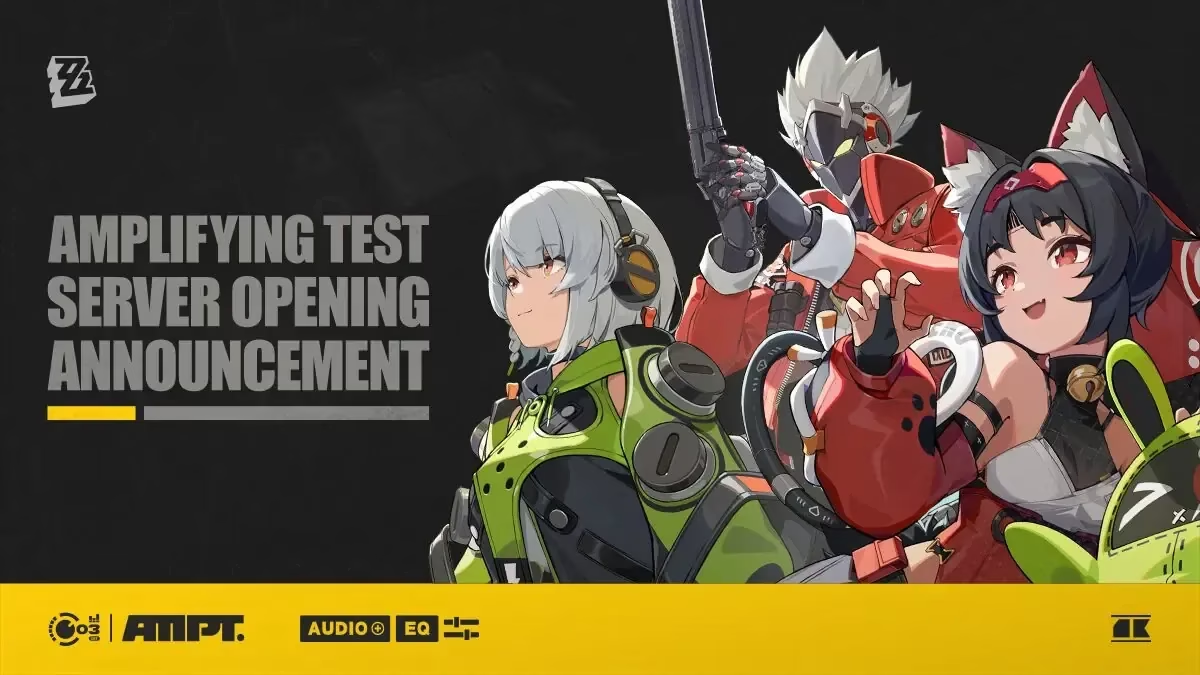
The device lock was the headline restriction. Each Test Qualification was tied to the first device a player logged in with on each platform. That meant a single HoYoverse ID could only log in with one iOS device, one Android device, and one PC. The system was like a monastic vow of stability applied to consumer electronics: choose your cell, and stay there. If a player changed devices on a given platform during the test, they would be automatically banned. The rule even included switching from an iPhone to an iPad, which surprised some Proxies who assumed that staying inside the Apple ecosystem would be safe. It was not.
Here is how the platform rules broke down:
| Platform | What was allowed | What happened if a player switched |
|---|---|---|
| iOS | One iOS device per HoYoverse ID | Automatic ban, including iPhone to iPad |
| Android | One Android device per HoYoverse ID | Automatic ban |
| PC | One PC per HoYoverse ID | Automatic ban |
The consequences were not negotiable. Because account sharing and trading were real risks, game accounts that were banned and disqualified from the test for changing devices were not open to appeals. HoYoverse framed this as a protective measure, and it warned Proxies not to trust account sharing, account trading, or test installation package sales. The message was blunt: protect personal account information and property to avoid unnecessary losses. In a way, the policy was like a cartographer drawing a map on the surface of a lake. The moment a player tried to move the map, the whole thing rippled away.
For those who stayed within the lines, the Amplifying Test offered a feedback loop. Proxies could report issues and suggestions by pressing the back button in the top-left corner of the City interface, then choosing 'More' and 'Feedback.' From there, they selected an issue type, filled in the details, and submitted. If they ran into game problems, they could also contact customer service. HoYoverse said it would continue to optimize the game's content and improve its quality based on that feedback. This was not just a courtesy; it was the entire point of a closed beta. The test was a mayfly's diary written in disappearing ink, brief and meant to be read quickly before it vanished.
The Amplifying Test was the third beta for Zenless Zone Zero. It was a closed, limited test, and all data would be deleted once it ended. That last detail mattered. Players could not carry progress into the final game. Any character levels, items, or story progress they earned were temporary. Zenless Zone Zero was still in development, and the content found in the beta did not represent final quality. In 2026, that caveat sounds obvious, but at the time, it was a crucial boundary between a preview and a promise. The beta was like a sandcastle built below the tide line: impressive for a moment, but never intended to survive the next wave.
For Proxies, the Amplifying Test was also a test of patience and reading comprehension. The device lock punished players who treated the beta like a casual demo they could hop between devices. It rewarded those who read the fine print and planned ahead. That may sound harsh, but HoYoverse had reasons. Account sharing and trading can undermine a closed test's data, and installation package sales can spread malware or compromise personal information. By tying qualifications to first logins and refusing appeals, the studio created a system that was easy to enforce and hard to game. It was a bit like a lighthouse keeper's logbook: one pen, one hand, one record, no crossing out.
The feedback process was similarly structured. Instead of vague forum posts, Proxies had a direct in-game path: back button, More, Feedback. They could choose an issue type, write details, and submit. For anything else, customer service was available. This structure helped HoYoverse sort signal from noise. In a beta with limited slots, every report had to count. The team wanted to know about bugs, balance problems, and quality-of-life gaps. They did not want to chase down account-sharing disputes or device-switching appeals.
In 2026, Zenless Zone Zero has moved far beyond that April 2024 test, but the Amplifying Test remains a useful case study. It shows how a major studio handles a closed beta: strict device binding, no appeals for rule breakers, clear feedback channels, and a firm reminder that beta data is temporary. For players who remember New Eridu's early days, the test was a strange mix of excitement and restriction. It was a locked room with a very specific key, and only those who respected the lock got to see what was inside. The rest learned a lesson about reading the fine print before logging in.
That is the legacy of the Amplifying Test. It was not just a beta; it was a contract. HoYoverse offered early access, and in return, Proxies agreed to play by rules that protected the test's integrity. The data is gone, the test is over, and the final game has evolved. But the principles remain: one device per platform, no sharing, no trading, and no appeals for those who break the seal. For anyone looking back from 2026, it is a reminder that even a temporary world like New Eridu can teach permanent lessons about account security and community trust.